Can You Trust Prediction Market Odds?
“Prediction-market traders see a 70% chance that the average price of golf balls will exceed $50 a dozen next year.” You may come across a statement like this on a news report, and while it sounds authoritative, what does it actually mean? How does a prediction platform come up with those kinds of odds? And why $50? Why not $45 or $52?
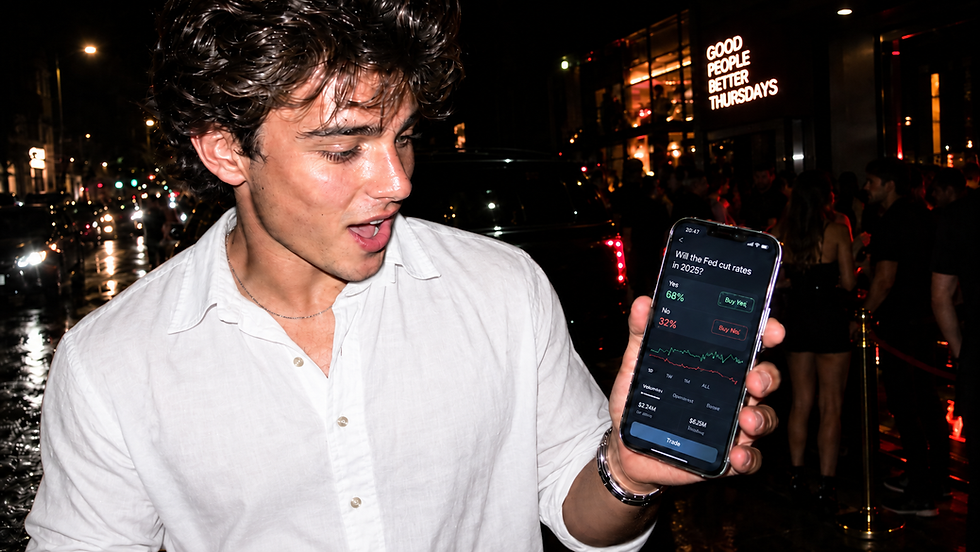
Prediction markets allow people to buy and sell contracts tied to whether an event will happen. As traders place bets, the price of the contract moves. That price is then expressed as an implied probability. So when a news story says prediction markets see a 70% chance of something happening, it does not mean a panel of experts studied the question and independently arrived at 70%. It means people trading contracts on that outcome have pushed the market price to a level that implies roughly a 70% probability.
Consider Jimbert Jimson, an economist who has spent more than 25 years studying the golf-ball market. He has worked as a pricing analyst covering manufacturers and retailers, and his research focuses on material costs, tariffs, supply chains, and consumer demand. On a prediction market, Jimbert goes by Birdie71. If Jimbert predicts that golf balls will cost more than $50 a dozen next year, his prediction comes from more than two decades of analyzing the numbers.
Now consider Jeffred Jeffworth. Jeffred is in his twenties, lives in Missouri, works in software sales, and likes golf. He watches the PGA Tour, follows the professional golfers, and tracks the latest news. He’s also a consumer and thinks golf-ball prices are going up. Jeffred, who goes by Eagle99, puts $50 on golf balls exceeding $50 a dozen next year.
Then there is Danrick Danfford. Danrick works at Bogey Bros., the largest golf brand in the country. An internal memo crosses his desk showing that material costs are rising and golf-ball prices will increase next year. Danrick logs in as Fore!play69 and bets on higher prices. His trade may make the market more accurate, but only because he has information unavailable to the public.
All three can become part of the same percentage, and “the market” may contain far more than Jimbert, Jeffred, and Danrick. It can include professional traders, bots, gamblers, golf influencers, people hedging other risks, casual bettors risking a few dollars, and traders putting up thousands. When you look at a prediction-market profile, you generally do not know which kind of person is behind it.
The strongest argument in favor of prediction markets is that the market combines many different judgments into one price. Better-informed traders can bet against worse-informed ones, and prices can change as new information arrives. That model can produce useful information.
But the percentage still does not tell audiences how qualified the participants are or where their information came from. Pseudonymous profiles make that harder to assess. Prediction-market platforms argue that pseudonymity protects privacy and encourages participation. Those can be legitimate benefits, but the companies also benefit commercially from a model that makes users more comfortable trading and keeps participation high.
Prediction markets turn thousands of judgments into one tidy number. The problem comes when journalism presents that number with the same authority it gives an identifiable expert without explaining how the number was produced. It is one thing to cite Jimbert Jimson, an identifiable analyst with more than two decades of relevant experience. It is another to cite a number that folds Jimbert’s judgment into the trades of people whose expertise and motives are largely unknown.
If prediction-market odds are increasingly being cited as public information, audiences should understand what they are looking at. Most audiences are unlikely to know who may be behind those trades, how market prices become probabilities, or how different those odds are from an expert forecast.
When you read that prediction markets see a 70% chance of something happening, mentally translate it to this: People betting on this outcome have pushed the market price to a level that implies about a 70% chance.
A prediction-market percentage can be useful context, but responsible journalism should not present it with more authority than the underlying source can support. News organizations should explain what the percentage represents, distinguish market-implied odds from expert analysis, and provide other research or data when available. Readers should approach those percentages the same way they approach any other source: ask what supports the claim, what contradicts it, and who or what produced it. A percentage should be the beginning of a question, not the end of one.
Written with AI assistance; edited and fact-checked by the author.

Comments